Vijesti Informativnog centra o Međunarodnom krivičnom sudu za bivšu Jugoslaviju (MKSJ) Sarajevo
The Cygnus Gymnasium paid a visit to the Sarajevo City Hall and the Information Centre on ICTY Sarajevo
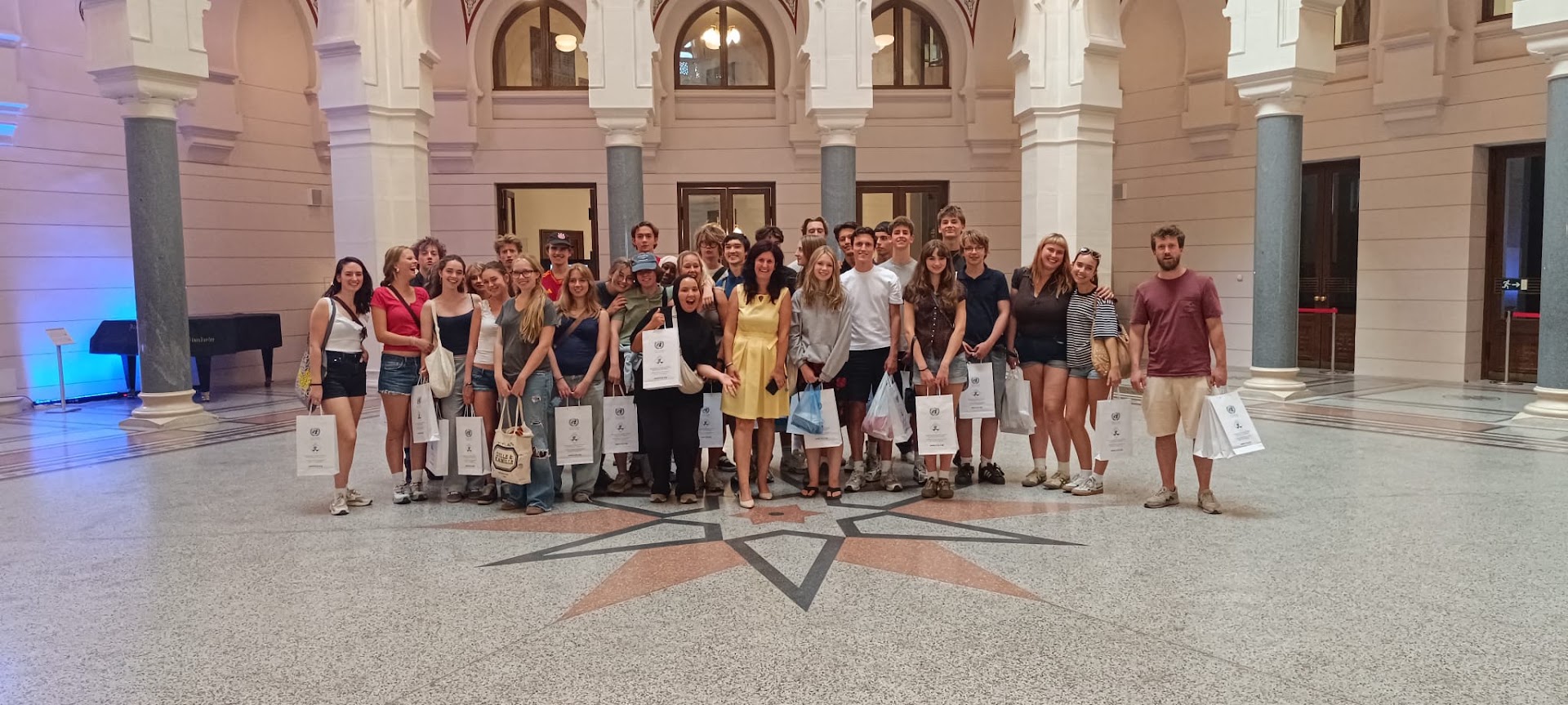
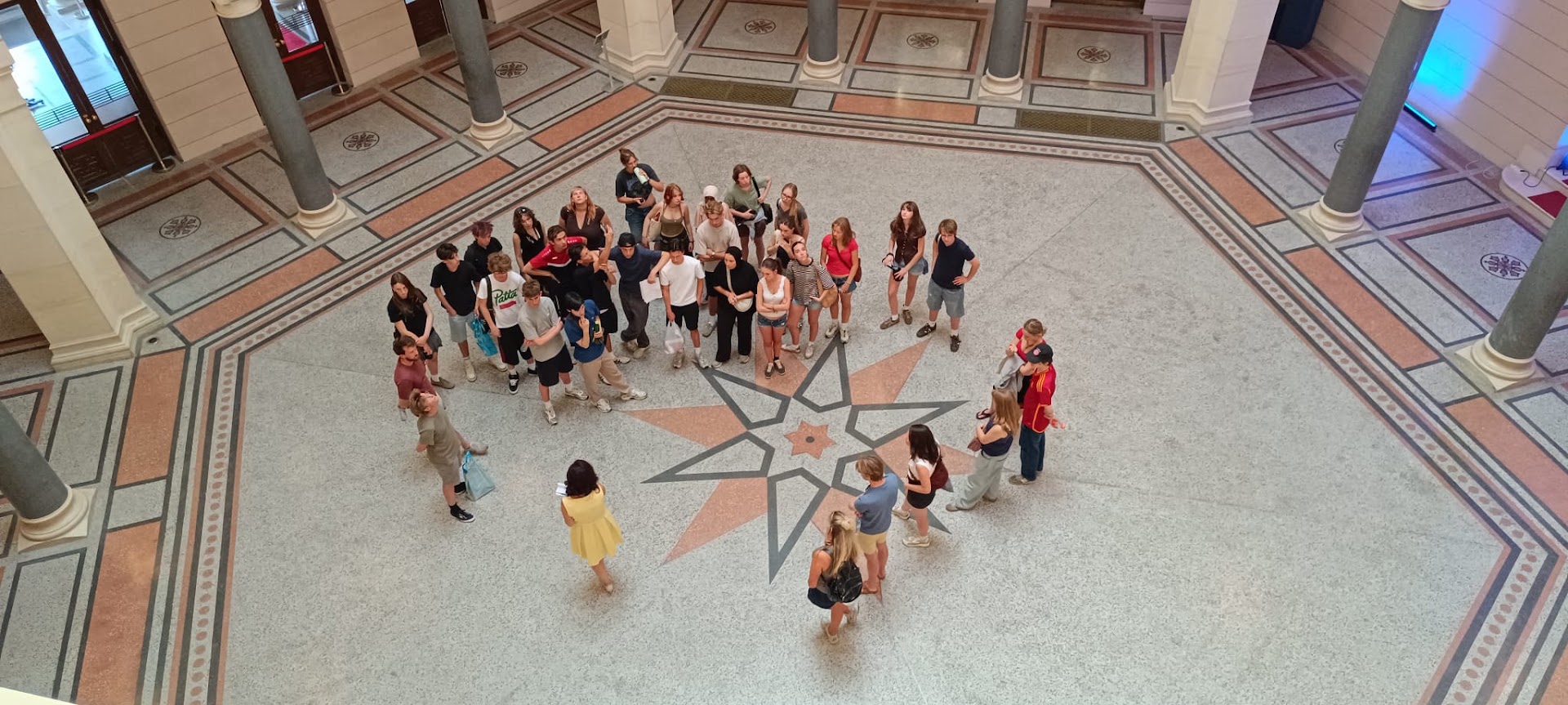
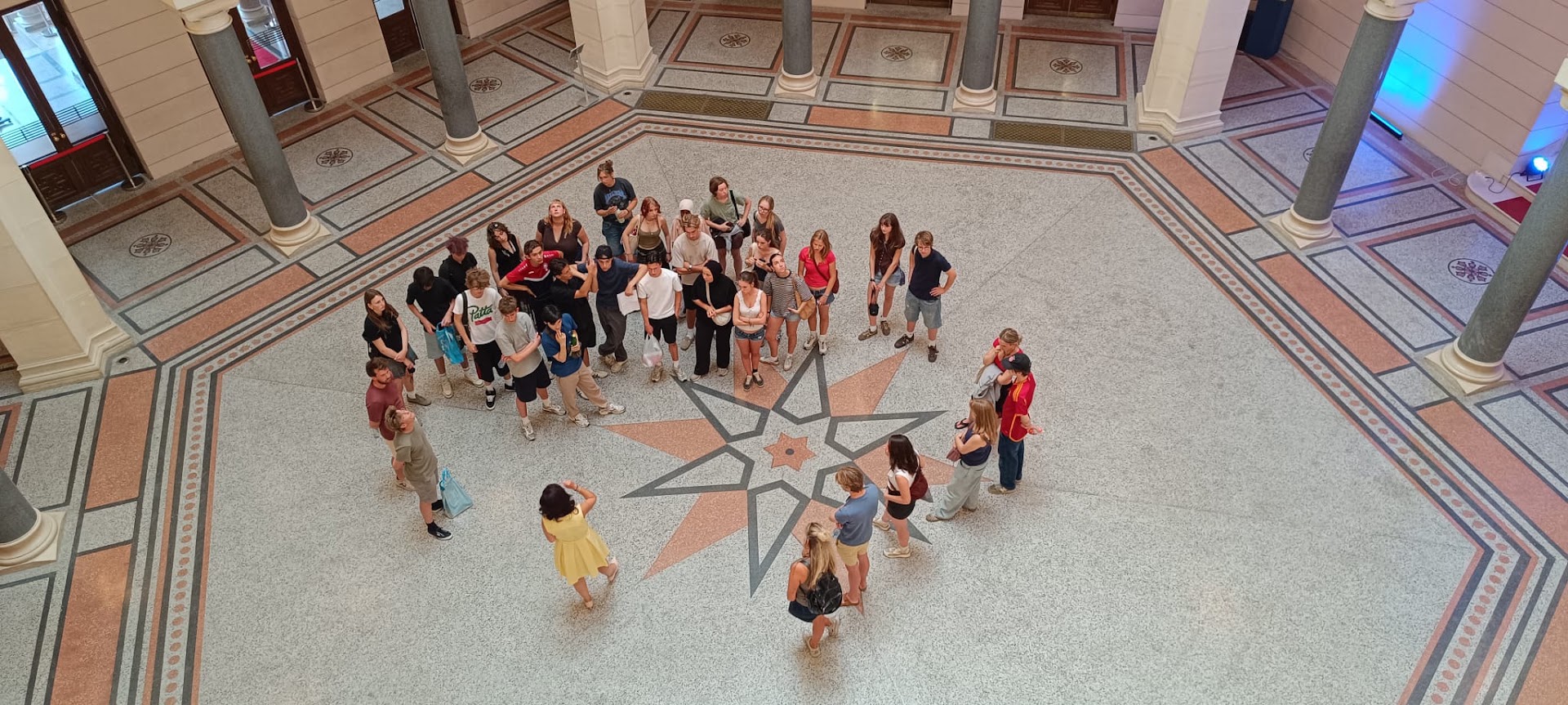
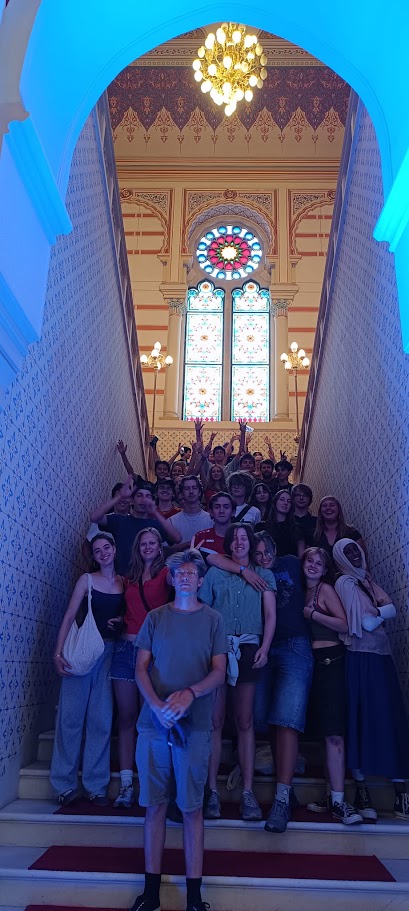
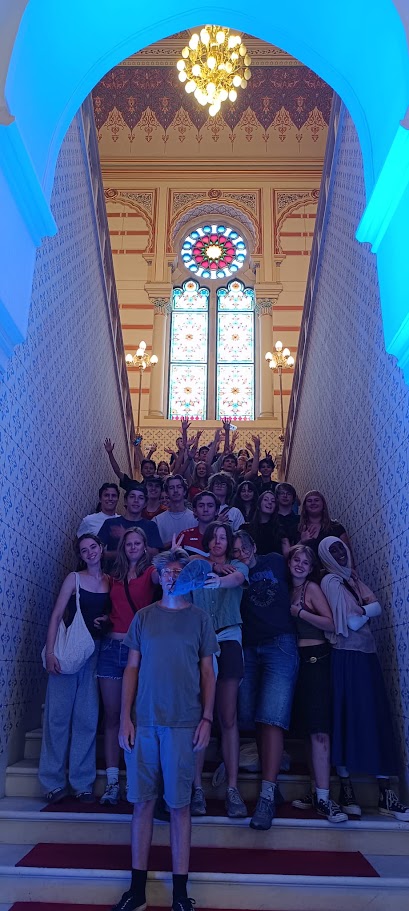
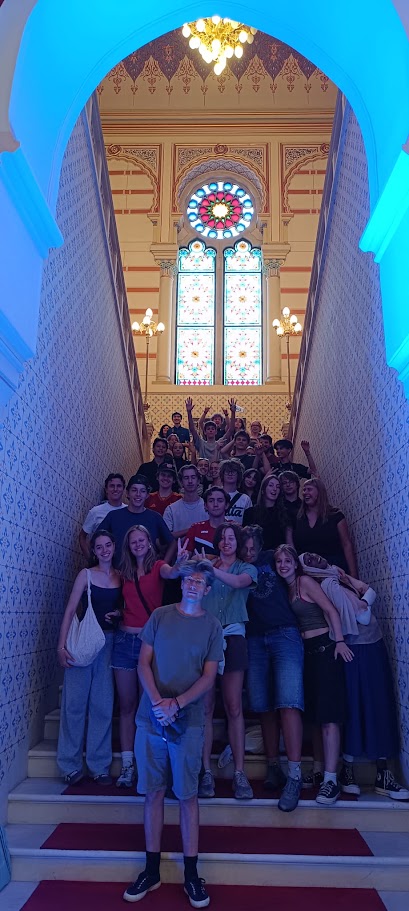
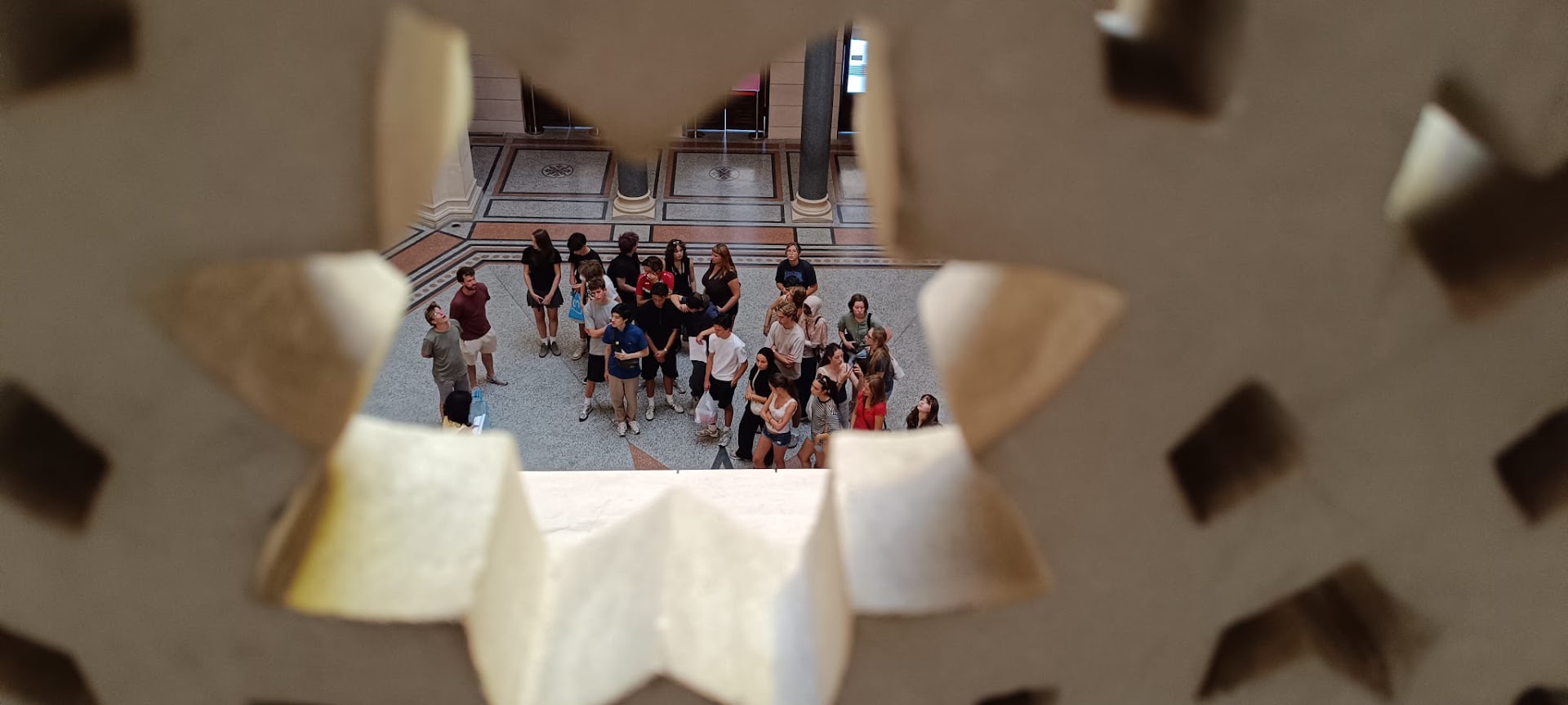
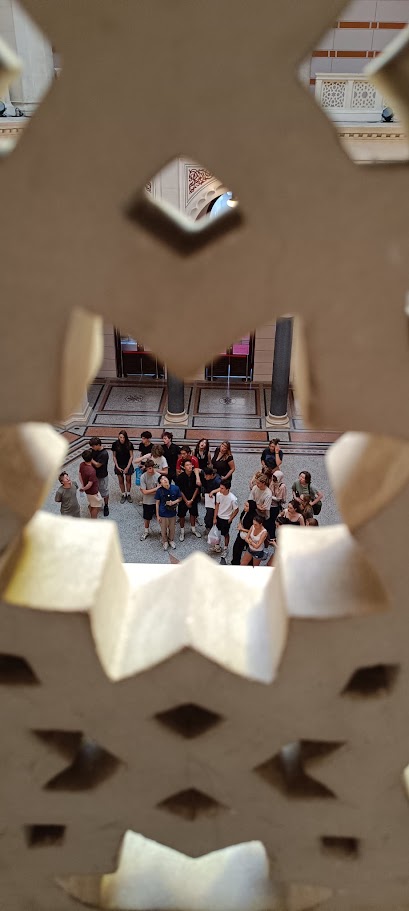
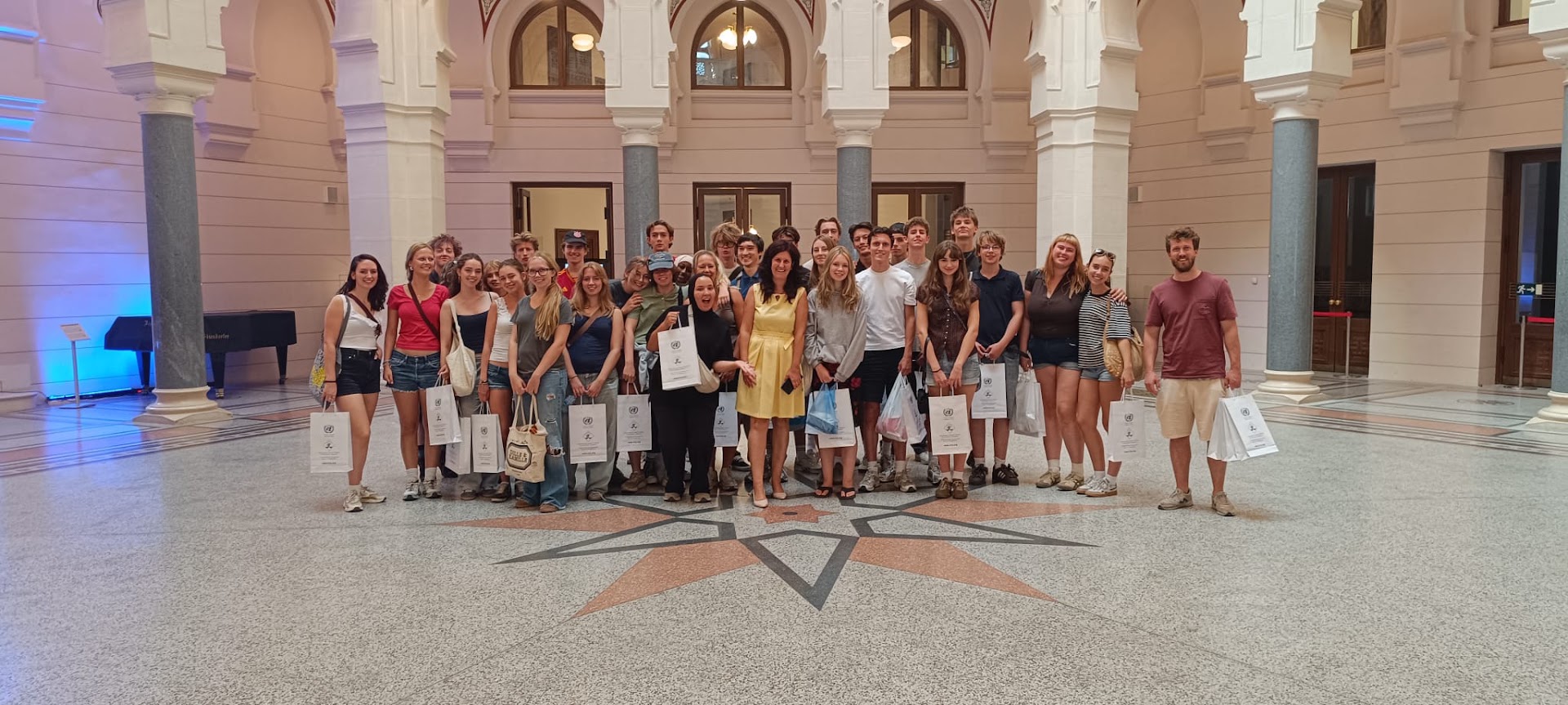
A group of 29 students from The Cygnus Gymnasium in Amsterdam, headed by history teacher Tijn Meulenberg and 5 other teachers, visited the Sarajevo City Hall and the Information Centre on ICTY Sarajevo. The students had the opportunity to learn more about the building, which was built in the Pseudo-Moorish style. Often called the “Pearl of the City of Sarajevo,” its astonishing beauty leaves no one indifferent. This visit unveiled the story of the building, from an introduction to its construction process—which involved three different architects—to its transformation into the National and University Library after World War II. While looking at the hexagonal atrium, which features a stunning glass dome overhead, the students were amazed by the massive stained-glass ceiling made of 829 hand-painted pieces of coloured glass.
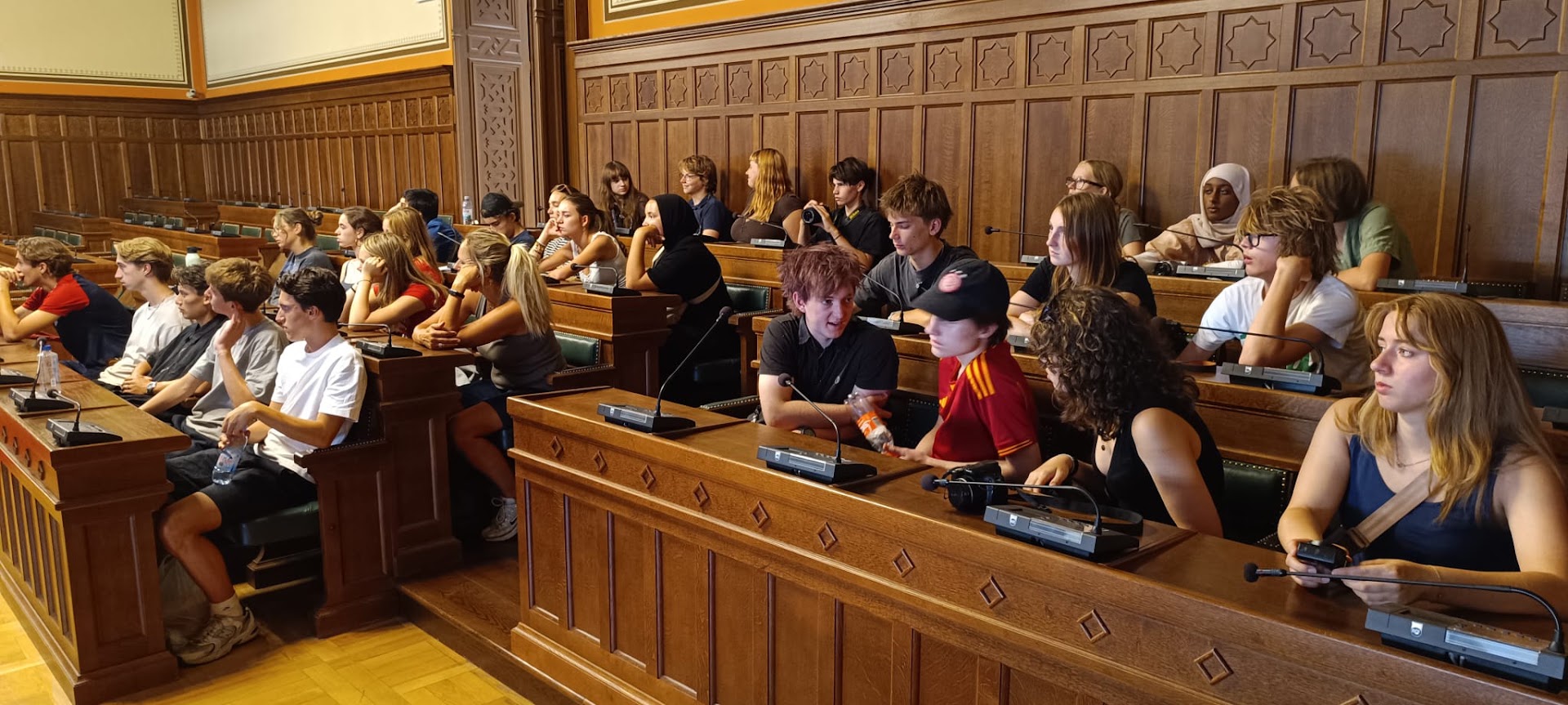
By learning about the Statute of the City of Sarajevo and the city’s constitution, the students gained insight into the work of the Sarajevo City Council and the election of the mayor. The museum located in the basement featured the exhibition “Sarajevo 1914–2014,” which explores the city’s complex 100-year history. It also includes an exhibition tracking the life of the building itself, showcasing its golden era starting in 1896, its tragic destruction and burning in 1992, and its triumphant reconstruction completed in 2014.
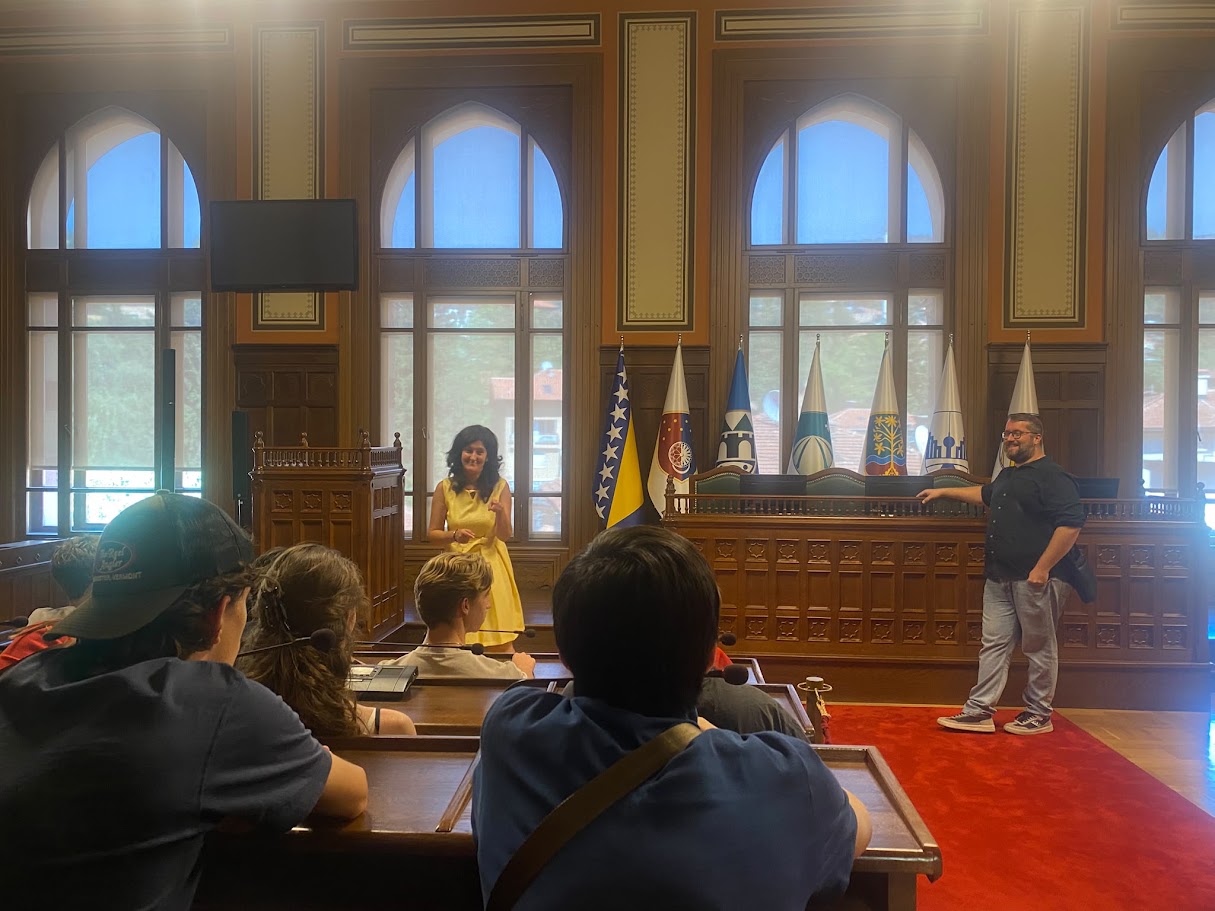
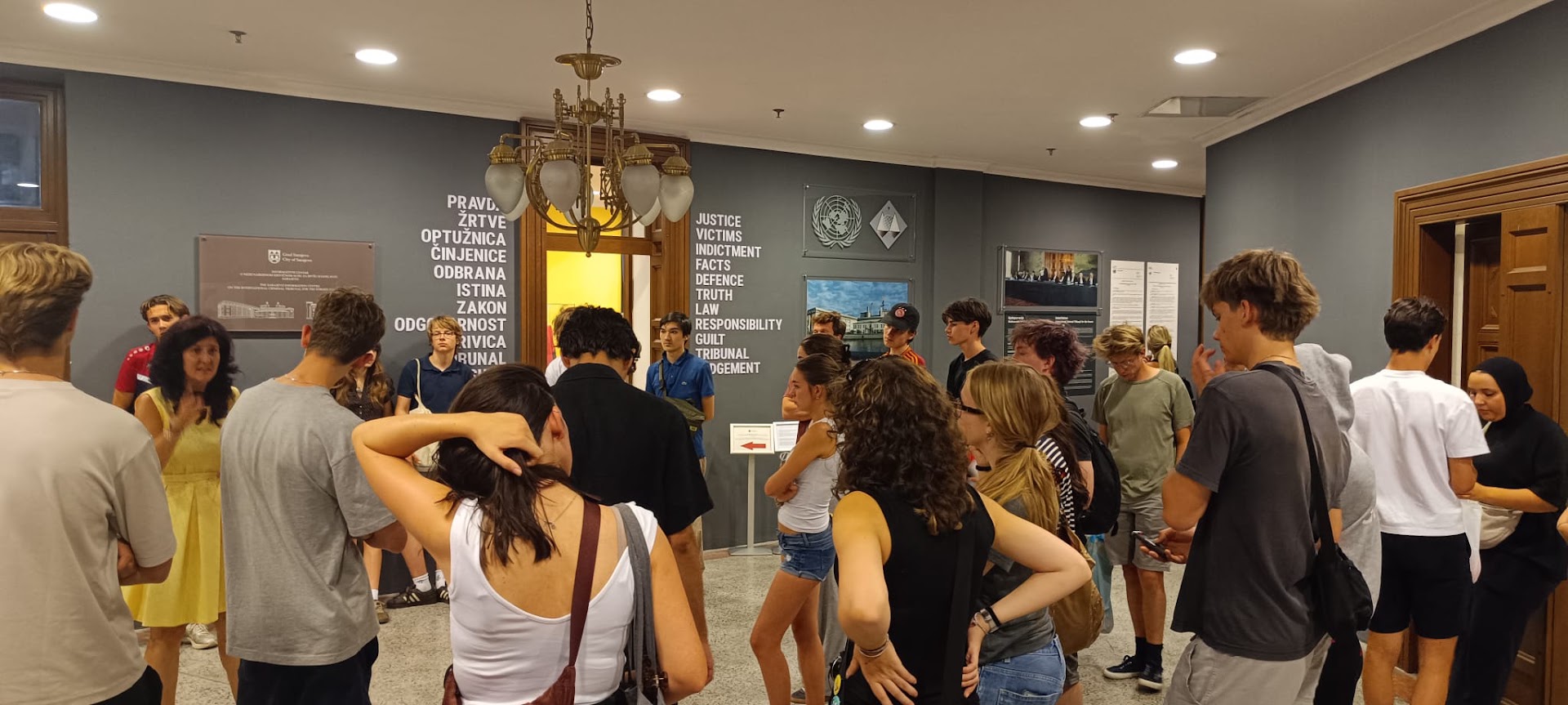
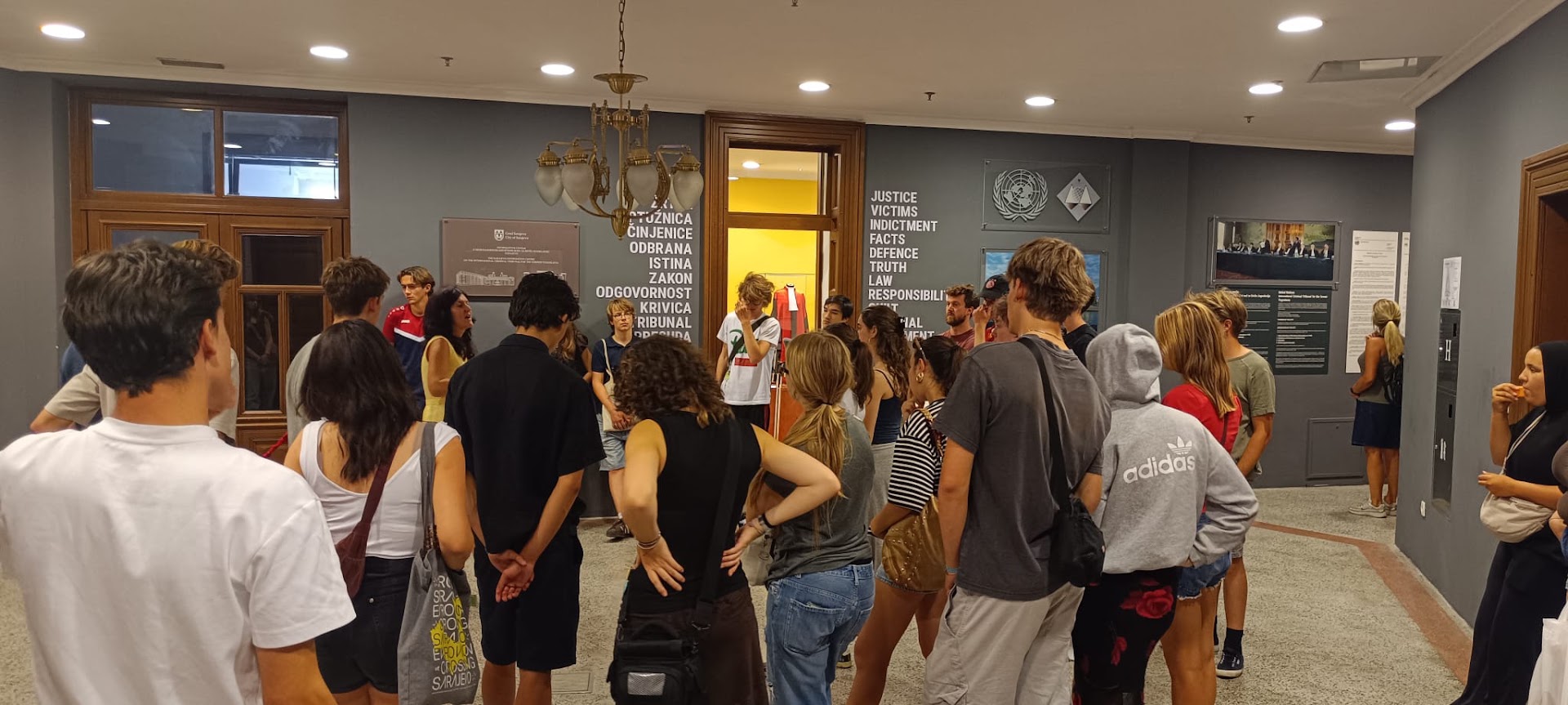
From the City Hall museum area, the students continued their study visit to the Sarajevo Information Centre, where they were presented with the Tribunal’s work and achievements. They stepped inside the authentic ICTY Courtroom No. 2, relocated from The Hague in May 2018, where trials for committed war crimes were once held. The visit concluded with a tour of the exhibition component showcasing the work of the ICTY. This section presents the ICTY’s work and contribution through infographics of all individuals convicted before the Tribunal, categorized by the countries, regions, and towns where the war crimes were committed. The accompanying photographs, excerpts of testimonies, interview records, and other exhibits were sourced from the ICTY database and were originally used as evidence at the hearings conducted before the ICTY.
The visit ended with a quiz, engaging the students to review what they had learned while having fun at the same time. The students demonstrated a high level of knowledge and interest, providing correct answers to all the questions.